
Did the demise of Monoculture end John Lewis' Christmas Ad Supremacy?

Free Deidre, the Beyonce duet with Alexandra Burke on The X Factor, “how do you eat yours”, who shot Phil Mitchell?
If you know instantly what any of these are, congratulations. You experienced peak monoculture.
Giant cultural events, whether you wanted to know them or not, there was no avoiding them. It was those moments that seemed to “grip a nation”, filled column inches and made front bench politicians nervous when asked, “who do you want to win this year's biggest signing contest?”
Aside from big sporting events, monoculture is all but gone. We see isolated ones, like the Traitors, but even that online chatter doesn’t compare to thousands of people taking to Twitter to make #JusticeforGamu trend (if you know, you know).
When it comes to brand adverts specifically, there was a time that a slogan (“Thank Crunchie it’s Friday”) would become a part of the everyday. The jingle (“B’N B’N do-do-doo-do-do”, anyone?) was as catchy as a top 10 hit. For mass market brands, those days are gone (although some find it hard to come to terms with, that’s a story for another day).
Christmas is probably, or was, one of the last beacons of commercial monoculture in the UK. And John Lewis ruled the ad space, with its annual ads becoming as much a part of Christmas as your Nan’s dodgy Cranberry Sauce.
John Lewis Christmas ad: The rise and demise
There was big money in these ads, with budgets some indie filmmakers would hunger for. Cinematic direction with the likes of Lily Allen lending plinky-plonky vocals over a lofi cover of a British anthem. Talents from acclaimed film directors, and featured CGI and special effects that would make Doctor Who envious were in full force.
John Lewis was the king of the Christmas ad.
The anticipation around when its latest cinematic masterpiece became an unofficial ushering into the festive season. If you’re getting people to ask the question “Have you seen the new John Lewis Christmas advert?” you’ve created something most advertisers want to achieve but little ever do; memorability, recall, excitement!
The much loved British store started to put out Christmas ads in 2007, with Shadows directed by The Greatest Showman's director, Michael Gracey. Its rise, however, was steady. Its early ads featured products tied in with emotive story telling…marketing 101 right? In 2012, the retailer put out The Journey, featuring a snowman trying to reach his snow-wife, which very much played like a well funded short film. All scored beautifully to a haunting cover version of a song, a trope which would set precedent for years to come. The Power of Love by Gabrielle Aplin bagged a number one on the UK Official Chart as was the popularity of the ad. A true monoculture moment.
THis wasn’t an isolated flash in the pan moment, ths adverts became so popular that it break any budding pop star into the top 20. Lily Allen’s cover of Somewhere Only We Know used in the Bear and the Hare, became her third number one.
Peak Penguin
This cinematic era of John Lewis ads did little to sell actual products, they were short films, whimsical, firm art direction, well acted and or illustrated programmes in the ad break. I’m sure many ad philosophers could wax lyrical about the importance of emotional connection but let’s not be that pedantic here. In short, they put succeeded in cementing John Lewis as the Christmas retailer, they became the ones to beat.
Despite its lack of hard sell, the inevitable stars of these ads made for great merch and at its best could drive the UK public into stores.
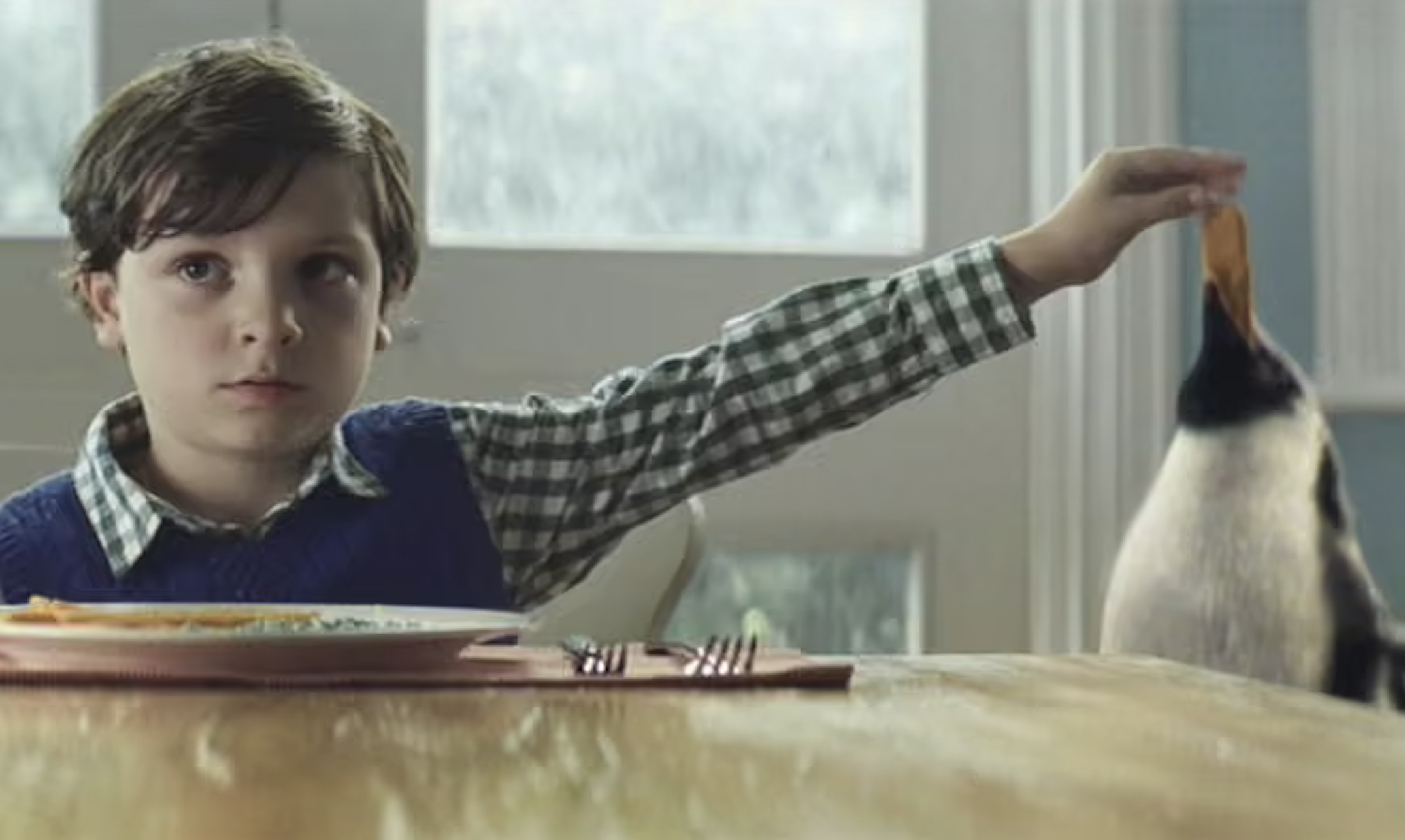
Monty the Penguin, one of John Lewis’ most memorable Christmas adverts.
Monty the Penguin could easily claim the top spot at the peak John Lewis Christmas ad, about a child imagining his plush penguin as a real (CGI animated) penguin. It captured childhood in a bottle and Brits drank it wholesale. Cue Monty the Penguin plush shortages in stores.
Successful ads followed, more cover versions of songs charted from Man on the Moon (2015) which earned itself the dubious honour of getting parodied by Aldi, to Moz the Monster (2017) directed by acclaimed French filmmaker, Michael Gondry. John Lewis continued to roll out the mini masterpieces.
Aldi’s “response advert” to John Lewis in 2015
Within the creative world, there would be thought leaders drafting think pieces giving their two cents. Was it as good as last year? What next? Have they lost it? But I’m sure many were thinking, I wish I did that…But just like The X Factor in the UK seemingly a shoe in to claim Christmas number one from its winner, trends changed and so did the bar of success.
When criticism on the abstract nature became louder, a more grounded ad followed (The Beginner in 2022) and as budgets fell a whole back-to-basics gaze into modern British family life was aired in 2025. The cinematic era was in the rear view mirror. Plus, with record losses of £124million in 2026, the desire to buy more and bigger [ad space] probably isn’t as strong.
Ad success that is gone forever…
The telly ad doesn’t dominate the same way it once did. Even in a social media era, John Lewis kept quite classic and traditional in its approach, big ad, big media spend.
Its fall from peak isn’t due to the brand's creative output. The audiences just aren’t there.
There’s no X Factor, Britain’s Got Talent doesn’t pull in 20 million and the news cycle has shifted as journalists consolidate and legacy media’s revenue free falls, meaning the desire to cover an ad editorially feels less likely.
Tactics to shift to TVC across streaming platforms follow, but with 4.2 million UK YouTube users subscribing to Premium to actively not see ads (a figure set to increase), the appetite to drink the commercial cool aid has shifted. When the ad break rolls, phones are unlocked and your costly ad on TV is probably being usurped by someone TikToker unboxing makeup.
John Lewis’ approach fitted audiences for that time. The concerted efforts to achieve coverage on news channels must be applauded in equal measure; this is not an organic process (hats off to all those PRs). To capture the same kind of cut through with the same energy, the same creative vision has gone.
Goodbye Monoculture
Monoculture’s death isn’t an instant one but as the media we consume fragments it’s all but inevitable. From the moment the Spice Girls launched Channel Five in the UK, the rise of satellite dishes attached to our homes, the decline was foreseen.
Social media sped up decline but let people join conversations instead of just watching. Memes and short viral clips (so Alison Hammond highlights) make moments last. The biggest cultural fragmentation machine also helped to democratised content and connected fandoms, particularly in the 2010s. Now, with content shifting toward AI, many niche communities leaving the platform formerly known as Twitter, and brands getting more overtly branded and less editorial. To cut through in the same way requires new and improved thinking.
The efforts to reach more people are vast, with more opportunity both commercially and creatively, but the days of just sponsoring Coronation Street to capture 4/10 Brits on a weekday evening is gone.
As for John Lewis, its reign of the de facto ad king of Christmas, wasn’t replaced by another brand. It was the last one to hold the title. Hopefully it’s Christmas cheer can linger a little longer.